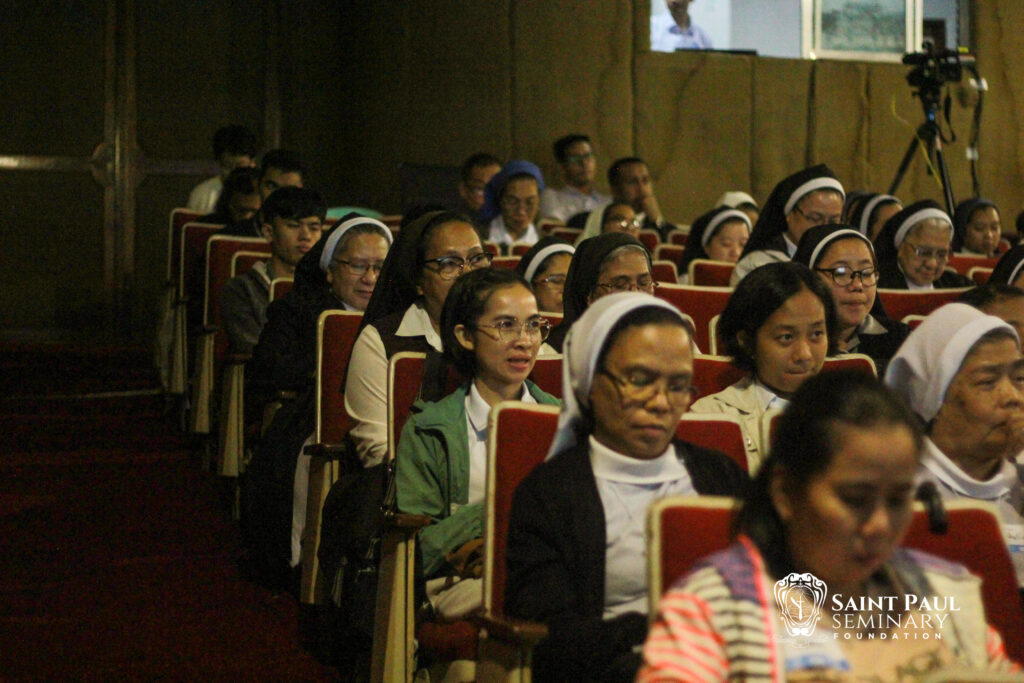
SILANG, CAVITE — Saint Paul Seminary Foundation (SPSF) gathered priests, religious men and women, seminarians, and other guests on Saturday, September 5, for an introductory formation session on Magnifica Humanitas: Pillars of Integral Formation for Consecrated Persons in the AI Age, exploring how consecrated life can remain authentically human amid the rapid development of artificial intelligence.
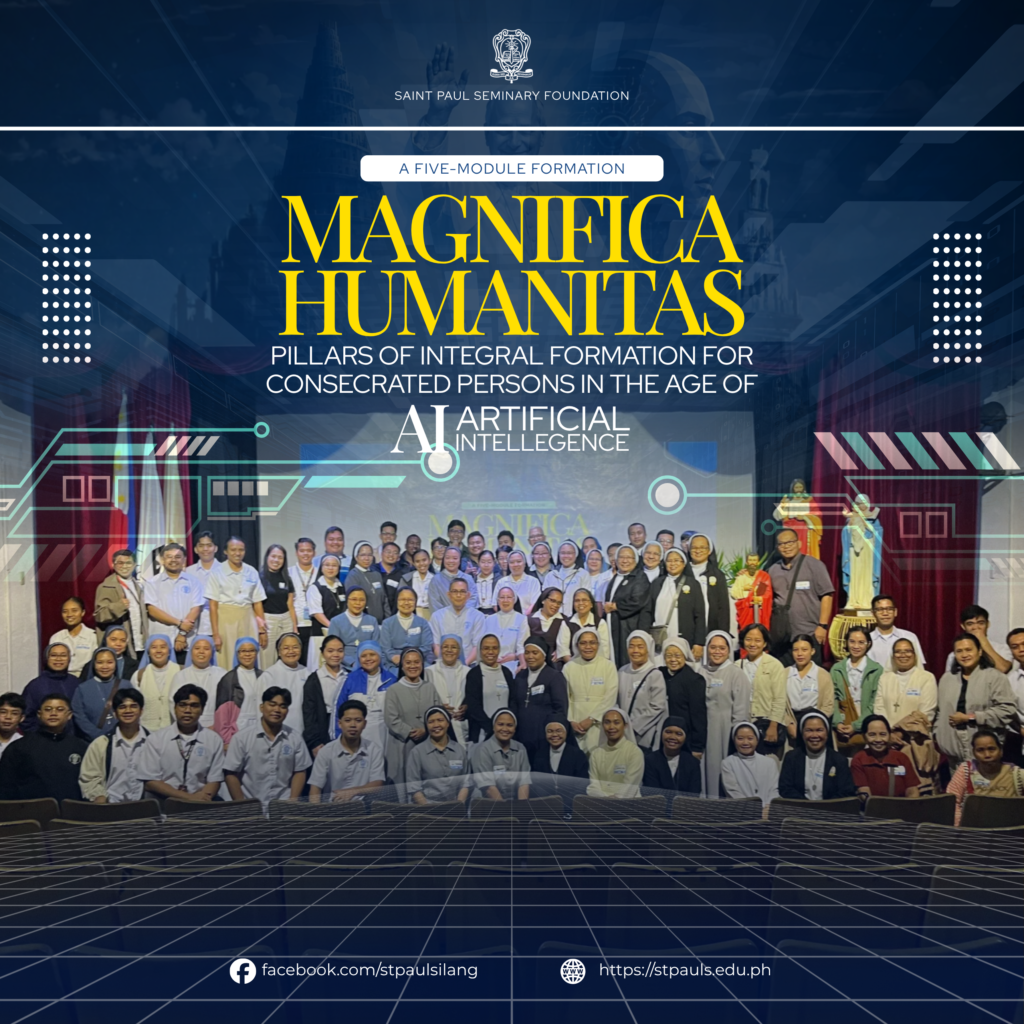
The half-day gathering offered an overview of five formation modules inspired by Pope Leo XIV’s Magnifica Humanitas, particularly its call to safeguard the human person amid the rapid development of artificial intelligence.
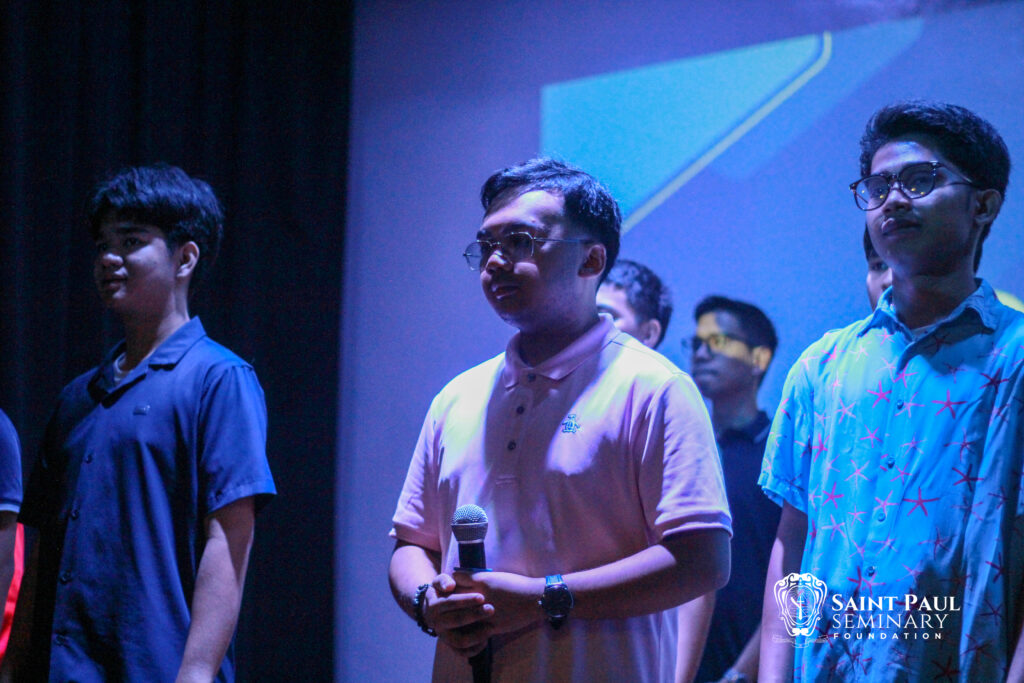
The program began with a musical salvo from the SPSF seminarians, followed by singing of the Philippine National Anthem. The opening set the tone for a morning centered on vocation, human formation, and the mission of consecrated life.
Br. Hansel Mapayo, SSP, welcomed the participants to SPSF and to the seminary community. In his opening remarks, he introduced Magnifica Humanitas as part of the Church’s continuing tradition of social teaching.
Br. Hansel first explained what an encyclical is before giving an overview of Pope Leo XIV’s document and its significance as a social teaching for the present technological age. He also situated Magnifica Humanitas within the tradition of Rerum Novarum, Pope Leo XIII’s landmark encyclical responding to the social questions brought about by the Industrial Revolution.
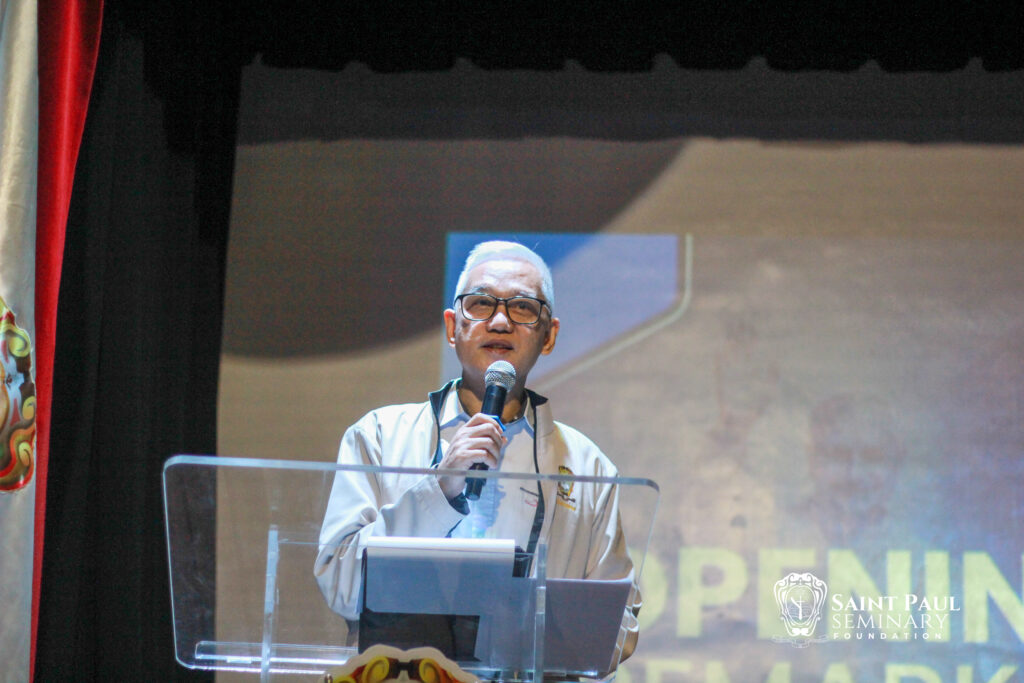
In this new technological context, Magnifica Humanitas places the human person at the center. The concern is not simply how technology develops, but how technological development affects human person and society
For the Society of Saint Paul, the discussion carries a particular significance. As a congregation founded with a mission in the apostolate of the means of social communication, the Pauline family has the responsibility to engage the changing world of communication while ensuring that its use remains directed toward the person, the Gospel, and the mission of the Church.
Fr. Norman Melchor R. Peña Jr., SSP, Rector and Dean of Studies of SPSF, then presented the overview of the five formation movements.
At the heart of Fr. Norman’s presentation was a question concerning the human person in an age increasingly shaped by artificial intelligence. While AI continues to develop capabilities once associated primarily with human intelligence, the deeper concern, he said, is what may happen to humanity itself.
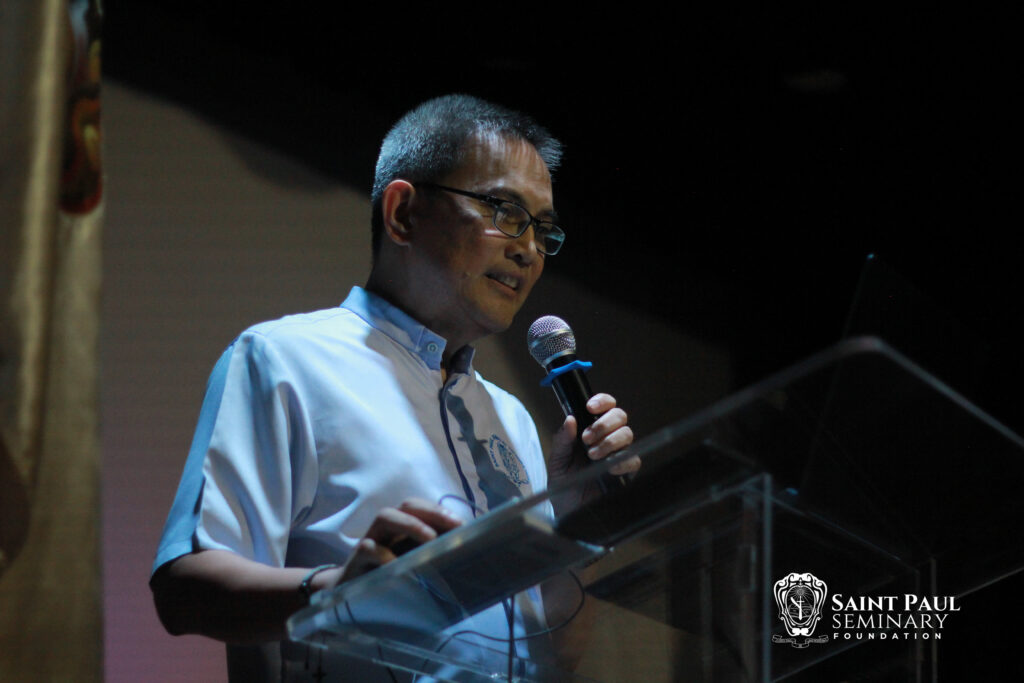
“The challenge is not that AI becomes too human but the human person becomes more artificial,” Fr. Norman said.
For Fr. Norman, formation in the age of AI therefore cannot stop at learning how to use technology. It must help people remain reflective rather than reactive, discerning rather than dependent, creative rather than merely copying, and responsible rather than reckless.
He further presented Magnifica Humanitas as fundamentally concerned with the human person. Despite its focus on artificial intelligence and technological transformation, the document continually returns to human dignity, freedom, love, and communion.
From this perspective, Fr. Norman introduced the five movements of formation: RENOUNCE, PRODUCE, PRESERVE, PROVIDE, and EDIFY.
The first, RENOUNCE, is presented under the theme “From Babel to Beatitude: Renouncing Technological Self-Sufficiency for Prophetic Consecrated Living.” Using the biblical image of Babel, the module invites religious persons to recognize the danger of technological self-sufficiency and the temptation to seek fulfillment apart from God.
The second movement, PRODUCE, “Co-Creators with God: Fruitfulness, Mission, and Creativity in Consecrated Life,” looks at creativity as participation in God’s ongoing work. Formation is presented not simply as maintaining what already exists but as producing fruit for mission and service.
PRESERVE, the third movement, focuses on “Safeguarding the Charism: Preserving Human and Spiritual Identity Amid AI Transformation.” The module asks what must remain essential amid rapid technological change. For Fr. Norman, preservation does not mean simply keeping things unchanged; it means nurturing and bringing what is essential to new life.
The fourth movement, PROVIDE, carries the theme “Truth, Service, and Stewardship: Consecrated Mission in the Age of AI.” It highlights the responsibility of religious formation and leadership to provide truth, ethical formation, digital competence, and spiritual discernment, especially in an environment affected by misinformation, manipulation, and algorithmic influence.
Finally, EDIFY, “Building Communities of Communion: Consecrated Life and the Civilization of Love in the Age of AI,” turns toward the task of building persons and communities marked by communion, fraternity, peace, solidarity, and love.
The five movements thus form a single path of integral formation: to renounce what diminishes authentic humanity, produce through creativity and mission, preserve human and spiritual identity, provide truth and freedom, and edify communities of love.
The presentation eventually returned to the Pauline spirit of Donec Formetur Christus in Vobis—“Until Christ is formed in you”—the formative ideal associated with Blessed James Alberione. For Fr. Norman, this remains the deeper purpose of education and formation: not simply to produce competent people, but to form persons in whom Christ takes shape.
“The future of consecrated life will not ultimately be decided by artificial intelligence,” Fr. Norman said. “It will be decided by whether formators continue to lead with wisdom.”
The morning continued with a panel reflection and open forum with Fr. Norman, Br. Hansel, and two religious sisters: Sr. Elfleda Palma, AR (Novice Directress) and Sr. Muareen, SM (Superior, Girls Town Silang), where participants raised questions and reflected on the implications of artificial intelligence for consecrated life, formation, leadership, pastoral ministry, and mission.
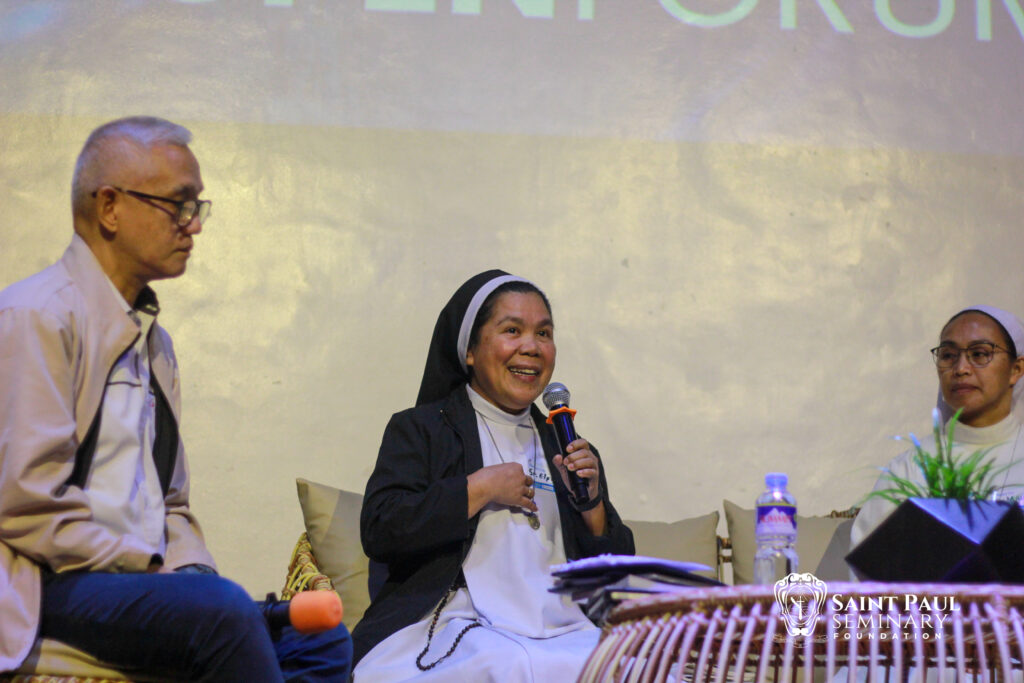
The discussion brought the conversation from the principles of Magnifica Humanitas to the concrete realities faced by religious communities today. The five modules were presented not as a finished program but as a framework for continued formation and conversation among consecrated persons and those entrusted with their formation.
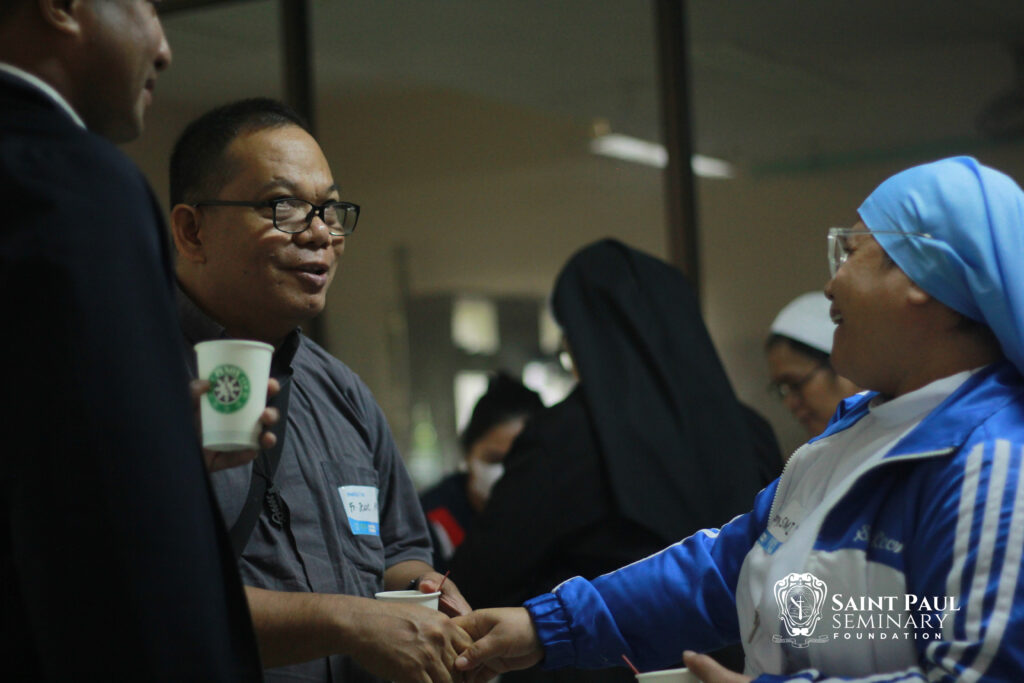
The gathering concluded with a synthesis and commitment, followed by the Prayer for the Apostolate of the Means of Social Communication, entrusting the Pauline mission of communication to God.
As the introductory session came to a close, the invitation was clear: to face the age of artificial intelligence not with fear or blind dependence, but with discernment, wisdom, and a renewed commitment to the human person.
For the Pauline family, the task remains ultimately the same—to use every means of communication in the service of the Gospel, so that in the midst of a rapidly changing technological world, Christ may be formed in persons and all may be led to God. All for the Gospel!

By Rhexelle Andrei Abdon
Rhexelle Andrei Abdon is a third-year AB Philosophy student at Saint Paul Seminary Foundation, discerning his vocation with the Society of St. Paul.